Why this guide is different
A city carved from living rock
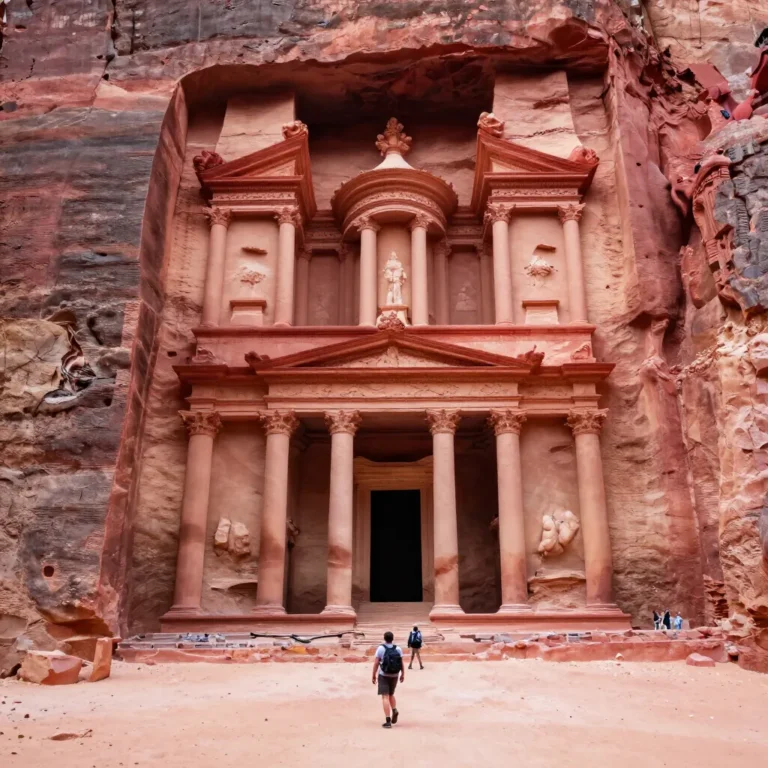
Petra was the capital of the Nabataean kingdom — a trading people who grew wealthy controlling the incense and spice routes between Arabia, Egypt and the Levant. From the fourth century BC they sculpted tombs, temples and halls directly into the rose-coloured sandstone, engineering an ingenious water system that turned a hidden valley into a thriving city of perhaps twenty thousand people.
Forgotten by the outside world for centuries, Petra was reintroduced to the West in 1812 by the Swiss explorer Burckhardt. Today it is a UNESCO World Heritage Site and one of the New Seven Wonders of the World. Yet beyond the famous Treasury facade lies an entire ancient city — tombs, a colonnaded street, a great temple and high-altitude altars — spread across a landscape that still feels untouched.
We have built this section to be genuinely useful. Every page is written from first-hand knowledge of walking the site, watching the light move across the stone, and listening to the people who grew up in Wadi Musa. Use it to plan, to understand what you are seeing, and to decide how much of Petra is right for you.
Explore the guide
Four ways into Petra
Start wherever your question is. Each section opens onto its own dedicated pages.
The Site
The history of the Nabataeans, the archaeology of the city, and dedicated guides to the Siq, Treasury, Monastery and the water system that made Petra possible.
Trails & Hiking
Every trail in Petra — walking distances, difficulty levels, the main route, the Back Trail to the Monastery, and the High Place of Sacrifice.
Planning Your Visit
How long to spend, a focused one-day itinerary, a relaxed two-day plan, practical travel tips, and a photographer’s guide to the best light.
Getting to Petra
How to reach Petra from Amman, Aqaba and Wadi Rum — drive times, the best routes, and how to combine Petra with the rest of Jordan.
The monuments
What to see in Petra
The site is far larger than the Treasury. These are the places we make sure our travelers experience — each links to a dedicated page.
The Siq
A 1.2 km narrow gorge that builds anticipation before revealing the Treasury. Walk it slowly — the play of light on the sandstone walls is part of the magic.
Al-Khazneh (The Treasury)
Petra’s iconic 40-metre facade, carved directly into the cliff. Best photographed in morning light when the rose-red stone glows.
The Royal Tombs
A row of grand facades along the eastern cliffs — Urn, Silk, Corinthian and Palace tombs — each with intricate detail and sweeping views.
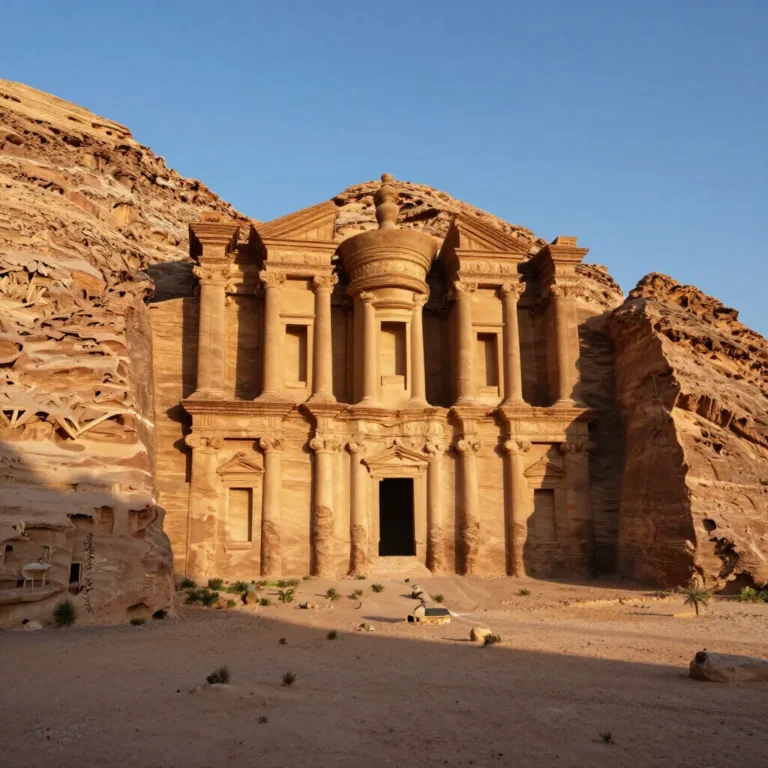
The Monastery (Ad-Deir)
A challenging 800-step climb rewarded by Petra’s largest monument. Fewer crowds and a vast desert panorama from the summit.
High Place of Sacrifice
A clifftop altar with panoramic views over the entire city. The ascent passes obelisks and carved channels — a quieter, spiritual route.
Little Petra (Siq al-Barid)
A smaller satellite site 9 km north, with carved rooms, banquet halls and a rare painted ceiling — worth the short detour.
Plan for you
Petra, whatever your pace
There is no single right way to see Petra. Here is how we think about it depending on who you are.
Petra for families
Manageable distances, shaded rest points and a pace that keeps children engaged — the main trail to the Treasury and Royal Tombs is doable for most kids.
Petra for hikers
The Monastery, the High Place of Sacrifice and the Back Trail reward fit walkers with the site’s most spectacular and least-crowded views.
Petra for photographers
Timing is everything. We break down the best light for the Siq, Treasury, Royal Tombs and Monastery hour by hour.
Petra for archaeology lovers
The Great Temple, Qasr al-Bint, the colonnaded street and the Nabataean water network reveal a city far more sophisticated than its tombs suggest.
Petra for older travelers
Golf carts, shorter routes and the option to ride up to the Monastery make Petra accessible well beyond the keen hiker.
Petra from anywhere
Coming from Amman, Aqaba or Wadi Rum? We compare the routes, drive times and the best ways to combine Petra with the rest of your trip.
Book
Petra tours, designed around you
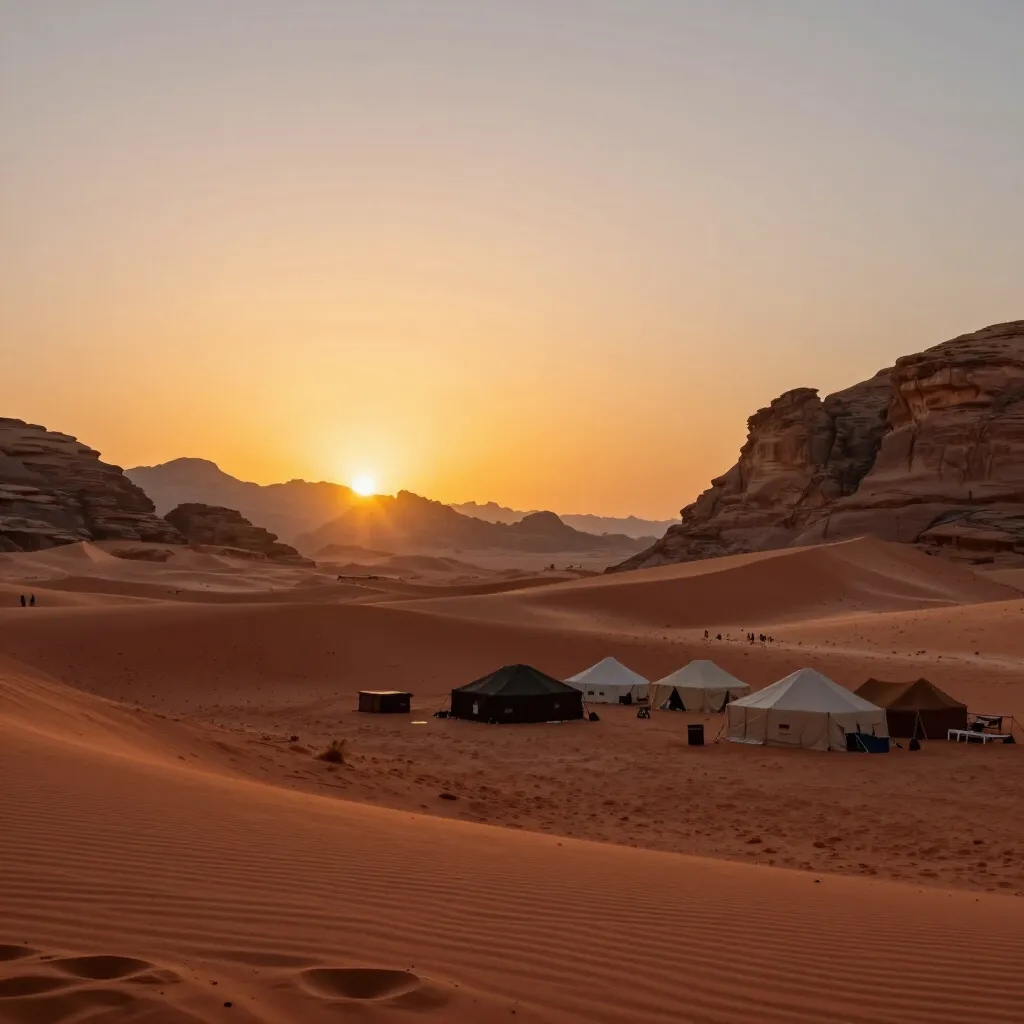
Two Day Tour – Petra, Wadi Rum & Dead Sea
From $98 per person

Three Days Tour from Amman: Jerash, Petra, Wadi Rum and Dead Sea
From $339 per person
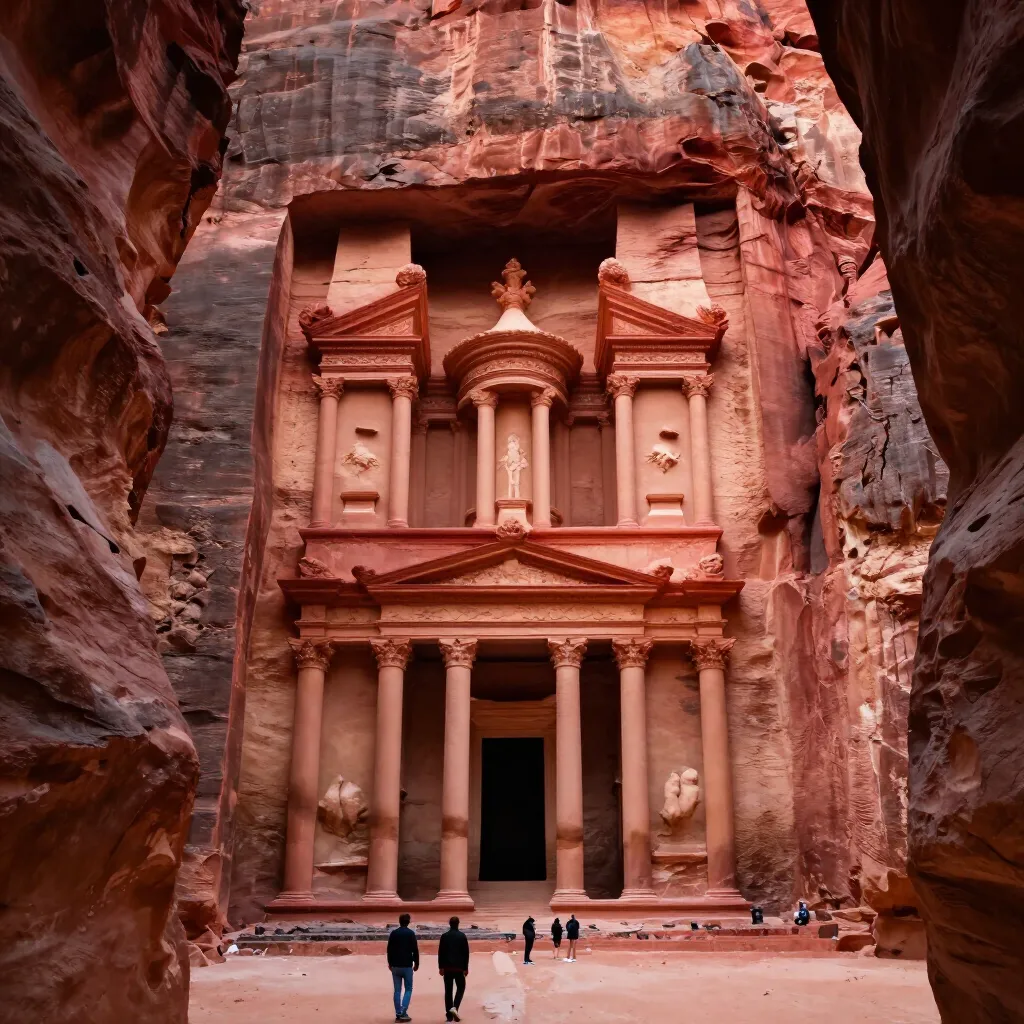
Petra Full Day Trip From Amman
From $171 per person
Book a private Petra tour
Departing from Amman or Aqaba
Private Petra tours with hotel pickup and private transportation, with a licensed local guide on request — built around your group, pace and departure time.
Petra Tours from Amman
Hotel pickup in Amman, private transport and a flexible departure time.
Petra Tours from Aqaba
Hotel or port pickup — the closest gateway to Petra, ideal for cruise travellers.
Beyond Petra
Combine Petra with southern Jordan
Petra is the anchor of Jordan’s south. These destinations pair naturally with a Petra visit on a single southern loop — and we build them into one private journey.
Wadi Rum
Red desert dunes and a Bedouin night under the stars — about two hours south of Petra.
Aqaba
Warm Red Sea waters and coral reefs — the natural start or end of a southern loop.
The Dead Sea
Float at the lowest point on Earth — a rest day between Petra and Amman.
Sources & further reading
Our Petra guides are written from first-hand experience of the site. For deeper reading, these are the authoritative sources we rely on and recommend.
- Petra Archaeological ParkVisit Petra — official site
- Petra World Heritage ListingUNESCO
- Petra Archaeological ProjectBrown University & ACOR
- American Center of ResearchACOR, Amman
- The Petra Siq: Restoration & StudyPetra National Trust
- Nabataea.net — research archiveNabataean studies
Every Petra page
See Petra through local eyes
Tell us your dates and travel style and we will craft a private Petra journey — with a local team who knows the city’s quiet corners and a licensed guide on request.
Related tours
Full Day · about 6 hours
Petra Back Trail — Monastery Route Private Hiking Tour
From$255 per group (up to 15)View more & Book now