What it was
A royal tomb, not a bank
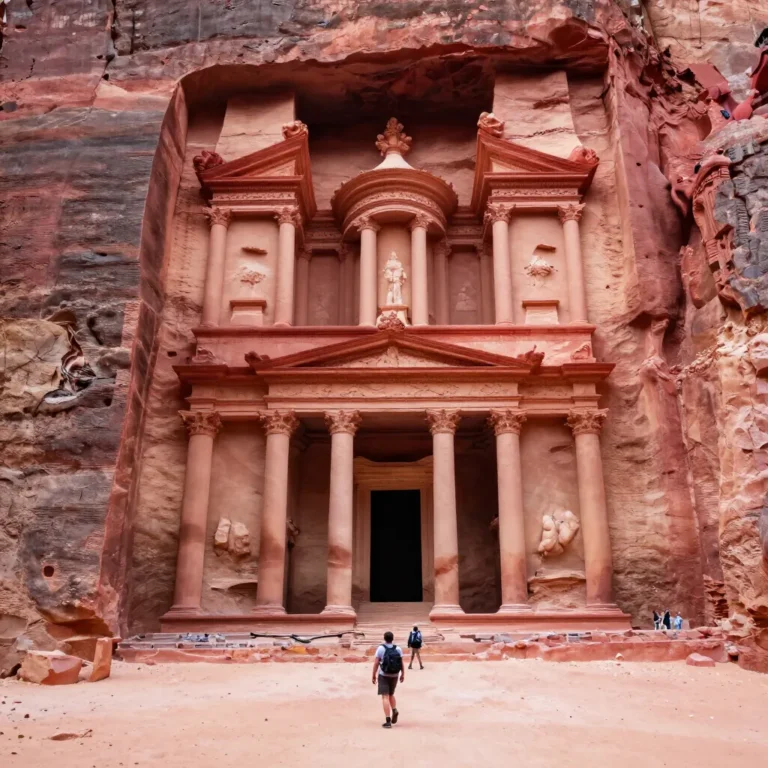
Al-Khazneh — ‘the Treasury’ — was built in the first century BC or early first century AD, at the height of Nabataean wealth and confidence. Its Arabic name comes from a Bedouin legend that an Egyptian pharaoh hid treasure in the urn at the top of the facade; the bullet marks you can still see on the urn were made by Bedouin shooters trying to break it open. There was never any treasure there.
In reality the Treasury was a royal Nabataean tomb — almost certainly the burial of a king, most likely Aretas IV, who ruled Petra at its peak. The elaborateness of the facade was a statement of power and prestige, designed to be the first thing a visitor saw as they emerged from the Siq. In that sense it worked exactly as intended: two thousand years later it is still the first thing every visitor sees.
The architecture
Reading the facade
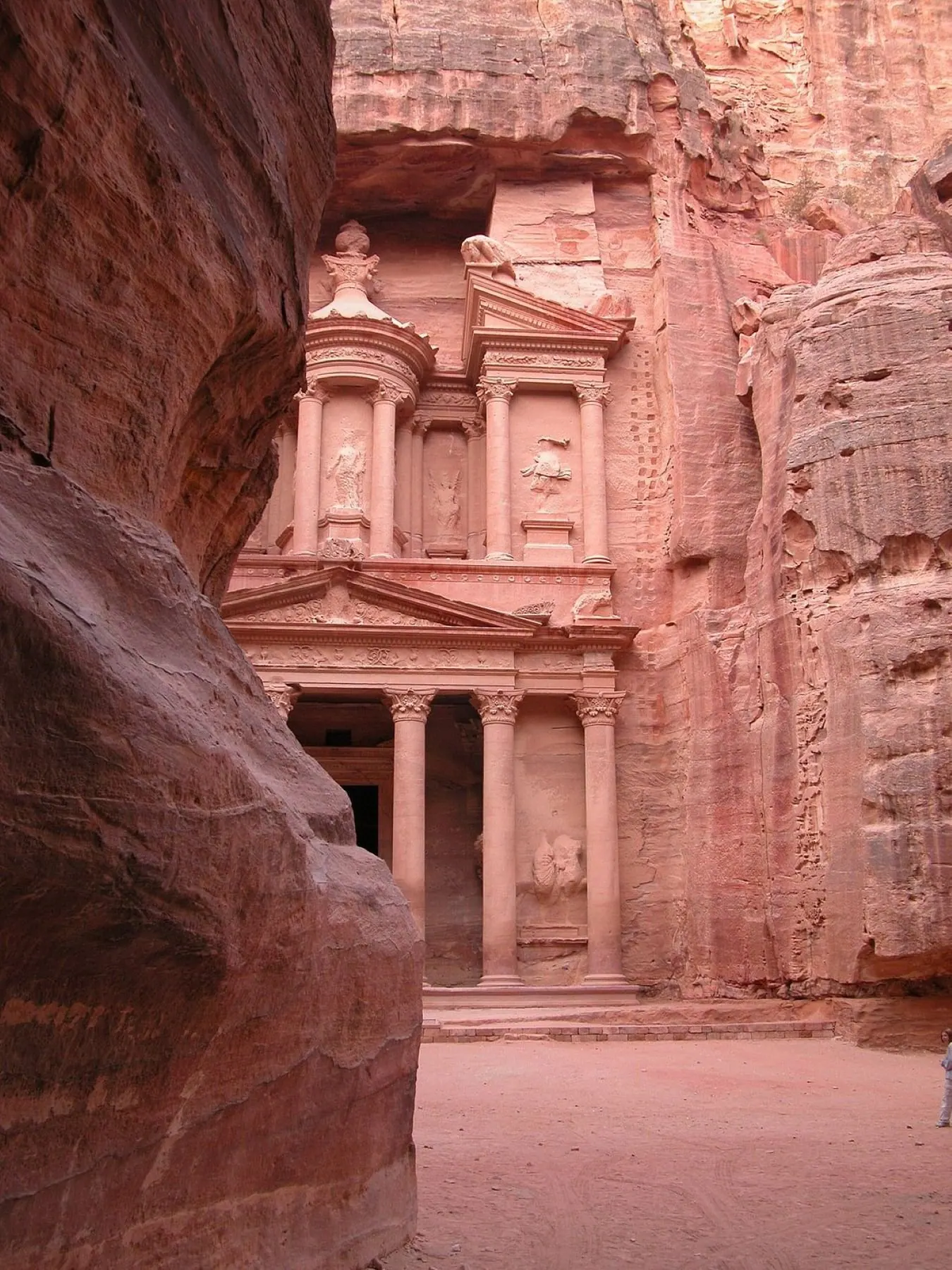
The Treasury is carved in two tiers. The lower level is a classical facade with six Corinthian columns, a central doorway and flanking niches that once held figures. Above it, a broken pediment sits between two more columns, and the whole thing is topped by the famous urn. The style is Greek, but the technique — carving an entire building out of the living rock — is purely Nabataean, and there is nothing quite like it anywhere else.
Look closely and you will see that some of the figures are weathered beyond recognition while others survive in remarkable detail. The stone here is not uniform: parts of the facade are harder than others, so two thousand years of wind and rain have carved the surface unevenly. The interior is a single plain chamber — there are no inner rooms or hidden passages, which is one reason the ‘treasure’ legend never made sense.
What is inside
Beyond the main doorway there is a large central room with three smaller side chambers cut into the rock. There is no decoration to speak of and no second storey inside — the upper facade is solid rock. The interior was used for the burial ritual and the laying out of the body, not for storing goods. Visiting inside is generally not permitted, and there is little to see if you could — the facade is the monument.
The Treasury at a glance
| Height | About 40 metres |
| Width | About 25 metres |
| Built | 1st century BC / early 1st century AD |
| Purpose | Royal Nabataean tomb (likely King Aretas IV) |
| Name origin | Bedouin treasure legend — not a real treasury |
| Best light | Morning (before ~10:00 AM) |
Seeing it well
Timing, light and crowds
The Treasury faces east, which means it is lit by the morning sun and falls into shadow in the afternoon. For the famous warm glow on the stone, aim to be there between about 7:00 and 10:00 AM. By late morning the direct sun has moved and the facade flattens; by afternoon it is in shade. This is the single most important timing decision for the whole site, and it is covered in detail on our photography page.
Beat the crowds. If you arrive at the gate at opening (6:00 AM in summer, 6:30 in winter) and walk straight through the Siq, you can have the Treasury view almost to yourself for a short window. An hour later it will be busy, and by mid-morning there are often groups, camels and carriage queues in front of it.
Walk around it. Most people stand at the Siq exit, take the photo, and move on. Walk up to the facade, look at the detail of the columns and the weathering of the figures, and then turn around and look back at the Siq entrance — the view from the Treasury back into the gorge is one of the best in Petra and almost nobody stops for it.
Petra by Night. On selected evenings the Siq and Treasury are lit by candlelight and a short musical performance is held in front of the facade. It is a different, quieter experience — atmospheric rather than archaeological — and worth doing if your visit coincides with a night it runs. Check the current schedule at the entrance.
See Petra through local eyes
Tell us your dates and travel style and we will craft a private Petra journey — with a local team who knows the city’s quiet corners and a licensed guide on request.
Related tours
Full Day · about 6 hours
Petra Back Trail — Monastery Route Private Hiking Tour
From$255 per group (up to 15)View more & Book now